
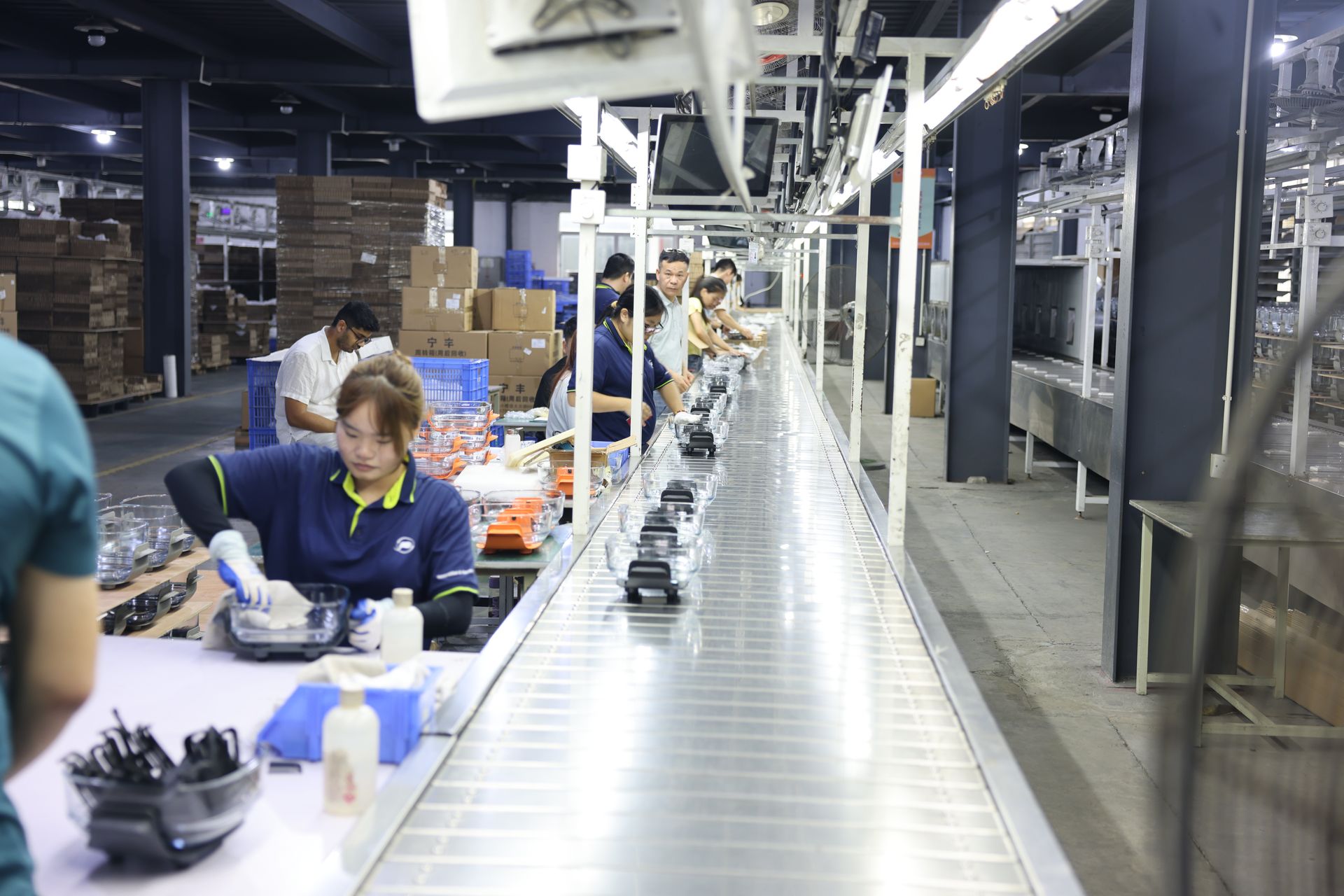
ODM (Original Design Manufacturing) is a model where the manufacturer contributes an existing or newly developed product design, and the buyer selects, customizes and sells the result under its own brand. ODM can shorten the path to market, but it does not remove the need for product validation, compliance and commercial differentiation.
The first-principles logic of ODM#
A product launch needs three things: a customer problem worth solving, a product that can solve it consistently and an operating model that can make and support it. ODM reduces the blank-page design problem. It does not decide whether the product fits your channel, price, packaging, warranty policy or target market.
What can usually be customized?#
- Branding, colors, surface finish and user-interface language.
- Packaging, manuals, accessories and retail presentation.
- Voltage, plug, software behavior or selected performance details where feasible.
- Commercial configuration such as capacity or bundled components.
The exact boundary depends on tooling, safety, certification and the product platform. Ask which changes are cosmetic, which require engineering, and which affect the compliance file.
ODM workflow#
- Shortlist a platform based on market, channel and target cost.
- Review technical documents, samples, test reports and change history.
- Define the customization matrix and acceptance tests.
- Approve a production-intent sample and packaging.
- Launch with batch inspection and a post-launch corrective-action process.
ODM risks to manage#
A shared platform can make a launch faster, but it may also reduce differentiation. A brand should ask about design ownership, exclusivity by territory or channel, tooling ownership, spare parts, firmware control and what happens if the platform changes. These are contract questions, not assumptions.
When ODM is a sensible starting point#
ODM is often sensible for a private-label brand testing a category, a retailer with a defined shelf date, or a team that has strong channel knowledge but limited appliance engineering capacity. It is less suitable when the product's core advantage depends on a proprietary mechanism that the platform cannot support.
FAQ#
Can an ODM product still be unique?#
Yes, if the commercial proposition, user experience, configuration, packaging and channel execution are differentiated. A cosmetic logo change alone is rarely a durable advantage.
Who owns the ODM design?#
It depends on the agreement. Confirm pre-existing IP, newly created work, tooling, drawings, firmware and any exclusivity in writing.
Does ODM guarantee a lower MOQ?#
No. Existing tooling may reduce development work, but MOQ is still affected by materials, packaging, production planning and the specific configuration.
Next step: use the product range as a shortlist, then request a platform-specific ODM discussion.