
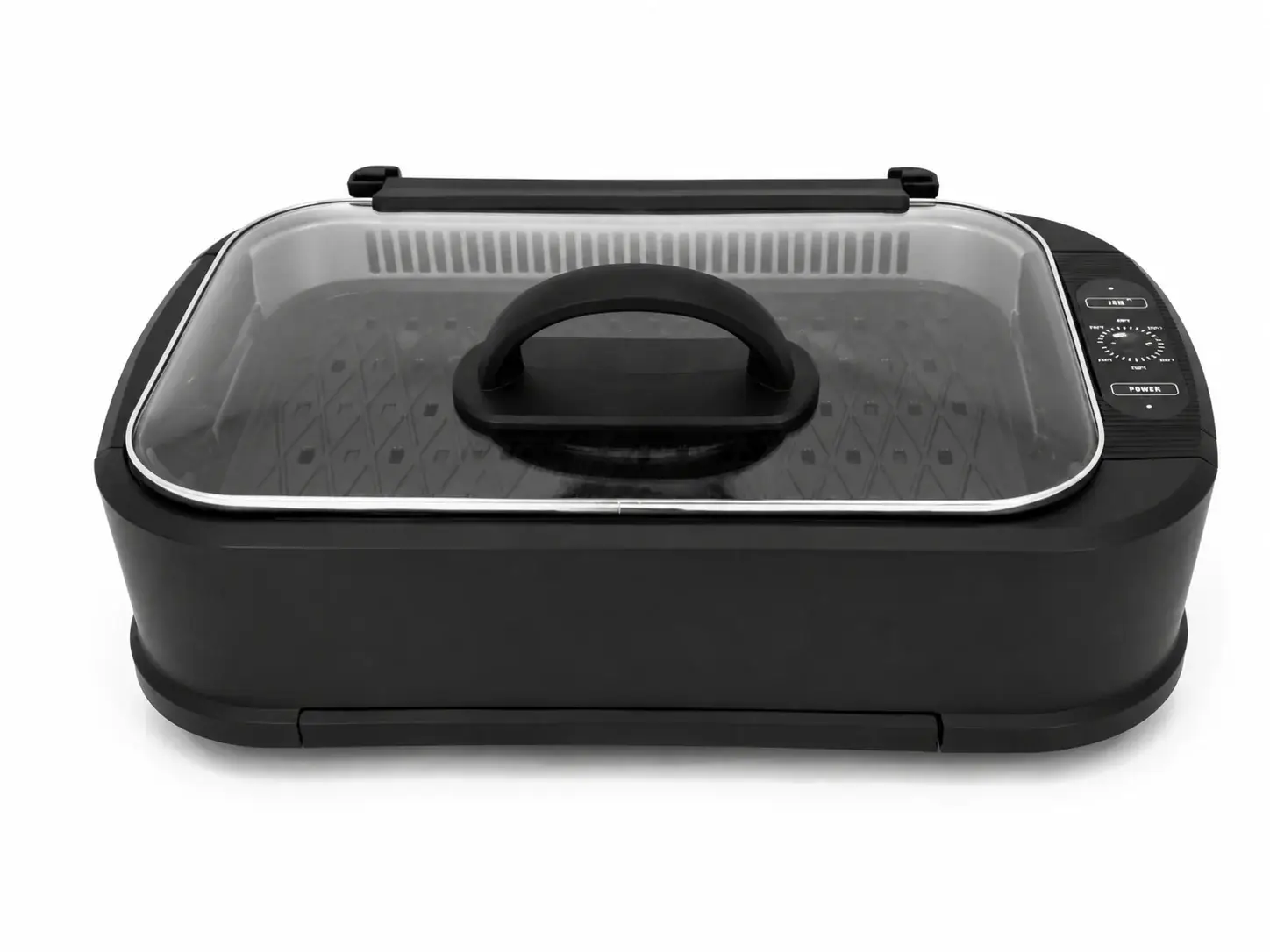
A smokeless indoor grill reduces visible smoke by combining controlled heating, a grease-management design and airflow that captures or redirects smoke away from the cooking area. Results depend on food, temperature, grease load, ventilation, cleaning and the exact product design; “smokeless” should be treated as a performance claim that needs a defined test method.
Break the problem into four variables#
- Heat: excessive surface temperature can increase grease pyrolysis and smoke.
- Grease: drip paths, trays and separation from heating elements affect smoke formation.
- Airflow: fans and ducts must move smoke without disturbing cooking or creating excessive noise.
- Maintenance: a blocked filter or grease path changes performance over time.
What to test as a buyer#
Do not rely on a product name. Test representative foods, temperature settings, cooking loads and cleaning states. Record visible smoke, odor, noise, splatter, surface temperature, grease handling and recovery after opening the lid. A supplier should be able to explain the test conditions behind any performance statement.
Product decisions that change the experience#
- Open, hinged or enclosed cooking geometry.
- Heating-element layout and temperature control.
- Fan position, filter access and noise level.
- Non-stick surface specification and replacement parts.
- Detachable components and cleaning instructions.
How X&E's category maps to the problem#
X&E's product range includes indoor smokeless grills with features such as touch or LED controls, ceramic non-stick surfaces and smoke-extraction designs on selected models. These are product-level features, not a blanket promise for every model. Confirm the exact configuration and test evidence for your target market.
FAQ#
Does a smokeless grill produce zero smoke?#
No appliance can guarantee zero smoke for every food and condition. A responsible claim defines the test setup and the limits.
Is an indoor grill the same as a smokeless grill?#
Not necessarily. Indoor describes the intended environment; smokeless describes a smoke-reduction design or performance claim.
What should a brand ask the manufacturer?#
Ask for the smoke test method, food load, temperature, fan/filter maintenance, noise data, cleaning procedure and how performance is checked in production.
Next step: compare models in the smokeless grill category and request a sample evaluation plan.